
Locked out of your vehicle
Entry only, with no key cut and nothing programmed, which makes this the simplest and quickest of the vehicle jobs. We come to where the vehicle is parked.
Or send a service request online if you cannot call right now.
A child or a pet is locked in the vehicle
Call 911 now. Do not wait for a locksmith. A vehicle interior heats up far faster than most people expect and emergency responders will reach you faster.
What to expect
- No damage. Entry is done without marking the paint, the weather seal, or the door frame. Your locks work exactly as before.
- Nothing is changed. No key is cut and nothing is reprogrammed, so your existing keys stay valid.
- The quickest job there is. A lockout is entry only, which makes it the simplest and least expensive vehicle service.
- Send your exact spot. The level and row in a garage, or the store entrance in a lot. That is what decides how fast somebody reaches you.
- CT registered locksmithRegistration LCK.0000486
- Insured locksmithWork done by an insured business
- Upfront quote and ETABefore anyone is dispatched
- Pay after the workOnly once the job is done
- Family ownedLocal and accountable
- Damage free entryOur standard method
What a vehicle lockout involves
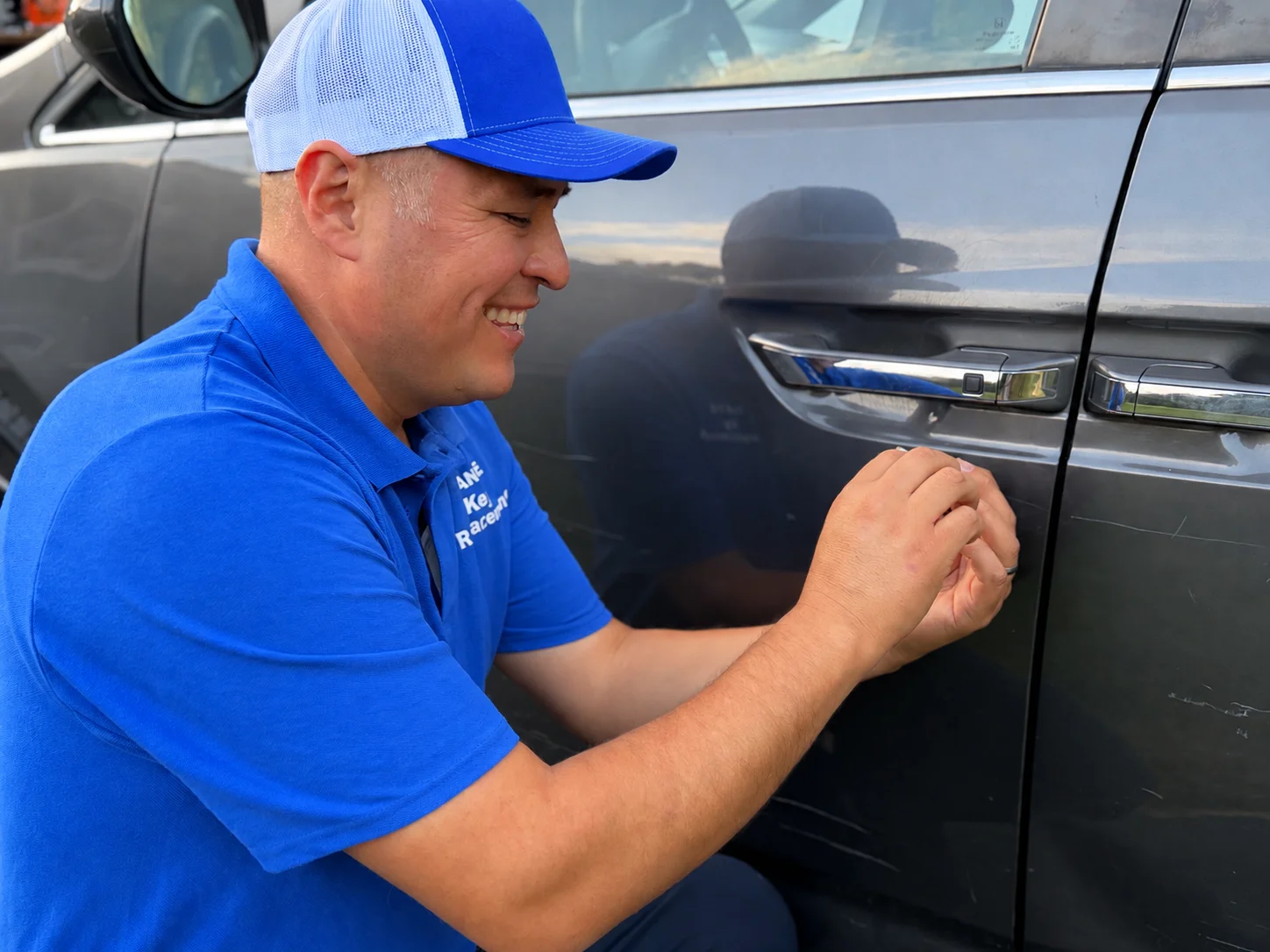
A vehicle lockout is entry to a locked vehicle without damaging the door, the lock, or the paint. No key is cut and nothing is programmed, which makes it the simplest and least expensive vehicle service. Proof that the vehicle belongs to you is required before it is opened. If your keys are lost rather than locked inside, entry alone will not solve the problem, because the vehicle still cannot be started.
- Locked in means entry only. Lost keys means a new key, which is a different job.
- Do not improvise with a coat hanger. Door seal and wiring damage costs more than the lockout.
- Child or pet inside? Call 911 first. That is not a locksmith call.
What counts as a vehicle lockout
Cars and SUVs
The most common lockout by a wide margin. On an SUV, always try the tailgate first, because it frequently unlocks separately from the doors.
Trucks and work vehicles
If this is a work truck, say so. Downtime on a job site is usually the real cost rather than the lockout itself.
Vans and commercial vehicles
Cargo and passenger vans often use different locking arrangements front and rear. Say which door you need opened.
Campers and RVs
Camper and RV lockouts are covered. Say whether you need the cab door or the living area, because they often use completely different locks.
Trunk lockouts
Keys shut in the trunk are a common call. On most vehicles the trunk is reached through the cabin, so a door is usually opened first.
Motorcycles
Motorcycle lockouts are not offered. That has been asked and answered rather than left vague, so you are not sent on a wasted call out.
Motorcycle lockout is not offered
This is not a service we take on, so a specialist in that work is the right call. Knowing now saves you a wasted visit.
Why improvising is the expensive option
Every experienced locksmith has been called to a vehicle where the lockout became the smaller problem. A coat hanger forced past the weather seal, or a screwdriver used to lever a door frame, causes damage that is not visible until later.
What is inside a modern door is the reason. Side airbags, window regulator mechanisms, wiring looms, and lock actuators sit directly behind the panel, and the weather seal that keeps water out is easily deformed. A leaking door seal or a failed window regulator costs considerably more than the lockout would have, and neither is covered by anything.
Why a locksmith rather than a tow service
A tow moves the problem somewhere else and leaves you without the vehicle. A lockout solves it where the vehicle already sits, in one visit, with no damage and nothing changed. You keep your keys, you keep your locks, and you drive away in your own car. It is also the least expensive service on this site.
Have this ready before you request service
Every item below either speeds the job up or decides whether it can be done at all. Having them ready at the start avoids a second trip.
- The year, make, and model of the vehicle.
- Whether you have any working key or fob left.
- The exact location of the vehicle, including a lot, level, or row if it is in a garage.
- Registration or title in your name, plus a photo ID that matches it.
- Whether the vehicle is drivable and whether it is blocked in.
Why proof of ownership is always required
A locksmith who makes a key or opens a lock without checking ownership is helping a theft. We check ownership on every job, without exception. It protects your vehicle and your home from someone doing the same thing to you.
Bring a photo ID plus one document that ties you to the vehicle or the property. For a vehicle that is the registration or the title. For a home that is a deed, a lease, or recent mail with your name at that address.
Where the vehicle is changes how fast it is found
The lock is rarely the slow part. Finding the exact vehicle usually is. Here is what to send for each situation.
| Where you are | What to send | Why it matters |
|---|---|---|
| Multi level parking garage | Level, section letter or color, and row number | Sections repeat on every floor and look identical. |
| Large retail or supermarket lot | The store entrance you parked nearest | A single lot can hold hundreds of vehicles. |
| Street parking in a town center | Nearest cross street, plus vehicle color and plate | A long street runs through several blocks. |
| Apartment or condo complex | Building number and which lot area | Complexes often have several lots with identical layouts. |
| Rural road or driveway | Nearest cross road and a driveway description | House numbers can be spaced far apart and hard to see. |
| Highway shoulder | Exit number and direction of travel | Move somewhere safe away from traffic first. |
| Tow yard or impound lot | The yard name, and say it is a controlled site | Access has to be authorized before anyone can work. |
What decides the cost of a lockout
-
Tell us about the job
The year, make, and model, whether any working key is left, and where the vehicle is parked.
-
Get your quote and ETA upfront
You hear the price for your exact vehicle or lock, and when to expect us, before anyone is dispatched.
-
Pay when the work is done
Nothing is paid up front. You pay once the job is finished and tested. Card, tap to pay, and cash are all accepted.
What changes the price
- Key type
- A basic mechanical key, a transponder key, a remote head key, and a proximity smart key are different parts with different costs.
- Programming needs
- Some vehicles accept a new key with on board programming. Others require a diagnostic tool and a security access process that takes longer.
- How many keys are lost
- Replacing a spare while you still hold a working key is a shorter job than an all keys lost situation, which needs the key cut from the vehicle code and the system reprogrammed.
- Vehicle security level
- Some manufacturers hold key data behind a secure gateway or a waiting period. That changes the time and the equipment required.
- Location and access
- A vehicle in an open driveway is quicker to work on than one in a tight garage bay or a lot that limits access.
Lockout, rekeying, and lock change services
Fast, damage free entry and lock services for vehicles, homes, and commercial properties across Eastern Connecticut.
Vehicle lockout Current
Damage-free door and trunk entry for cars, trucks, and RVs.
Home and apartment lockout
Non-destructive front door, knob, and deadbolt picking.
Commercial lockout
Office, storefront, and commercial door unlocking on site.
Rekey locks
Change internal pins so old keys no longer work.
Lock change and hardware
Fresh locksets, deadbolts, and hardware replacement.
Car key replacement
Lost your keys during a lockout? New keys made on site.
Vehicle lockout questions
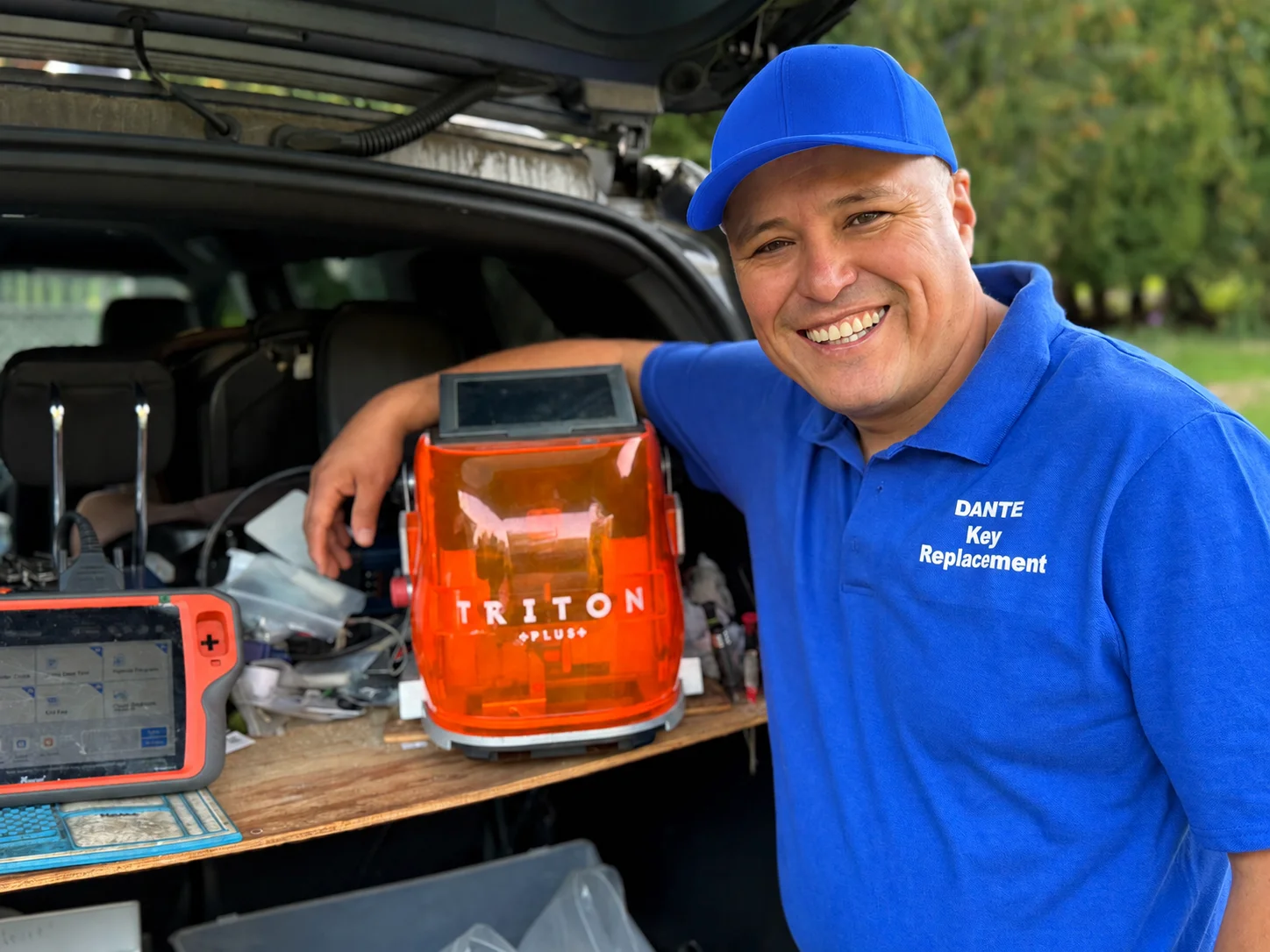
Done properly, no. The aim of a vehicle lockout is entry that leaves no trace, and modern technique is designed around not marking the paint, the weather seal, or the door frame.
The genuine risk comes from improvised attempts before help arrives. Coat hangers and screwdrivers wedged into a door commonly damage the weather seal, the paint, the window regulator, or the wiring inside the door, and those repairs cost far more than the lockout would have.
Call emergency services on 911 immediately. Do not wait for a locksmith, and do not wait for anything else.
A vehicle interior heats up far faster than most people expect, and this is a genuine emergency rather than an inconvenience. Emergency responders will get the door open and they will do it faster than any service call.
Usually yes, and it is a common request. On most vehicles trunk access is reached through the cabin, so opening a door is normally the first step regardless.
Say specifically that the keys are in the trunk when you request service, because it changes the approach and it is worth planning rather than discovering on arrival.
Yes. Opening a vehicle for somebody who cannot show it is theirs is helping a theft, and there is no version of this job that skips that step.
If your documents are locked inside, that is a common and workable situation. The windshield VIN is readable from outside, and ownership can often be confirmed another way. Say so up front so it can be sorted before anyone arrives.
No, and the difference matters for cost. A lockout is entry only. No key is cut and nothing is programmed, which makes it the simplest and quickest vehicle job.
If your keys are lost rather than locked inside, entry alone does not solve it, because you still cannot start the vehicle. That becomes an all keys lost job instead.
It happens more often than people expect, usually on a cold morning when a vehicle was left running to warm up and the door locked itself. It is a normal request.
Mention it when you request service. A running vehicle is a time sensitive situation because of fuel and because of the risk of it being taken, so it is worth flagging clearly rather than describing it as an ordinary lockout.
Vehicle lockouts in 48 Eastern Connecticut towns
Each town page explains what the local roads, housing, and access mean for the visit. Find yours below.
Hartford County 1 town
Middlesex County 4 towns
New London County 21 towns
Send your exact location
The level and row in a garage, or the store entrance in a lot. That single detail is usually what decides how fast somebody reaches you.
Or send a service request online if you cannot call right now.
Call or text with the vehicle or the property, the exact location, and what happened. You get an upfront quote and an arrival estimate before anyone is dispatched, and you pay only after the work is done.
Opening hours
HoursMonday to Friday 6:00am to 9:00pm, Saturday 6:00am to 11:00am
- Monday to Friday 6:00am to 9:00pm
- Saturday 6:00am to 11:00am
- Sunday Closed
Outside these hours, emergency jobs are taken case by case and are not guaranteed. Call to confirm.
Payment: Card, tap to pay, or cash, taken once the work is done.