
Car key and key fob programming
If your key turns but the engine will not fire, the blade is probably fine and the immobilizer is not accepting the chip. That is a programming problem, and it is solved at the vehicle.
Or send a service request online if you cannot call right now.
Not sure what you need? Start here.
Answer in plain words. This points you to the right service in about ten seconds.
What are you locked out of, or what key is missing?
What happened with the vehicle?
- My keys are locked inside You can see them, you just cannot reach them
- Every key is lost No spare anywhere, nothing to copy from
- I have a key but the car will not start It turns, or the car sees it, but the engine will not start
- My fob buttons stopped working Locks and unlocks no longer respond
- I want a spare before something goes wrong I still have a working key
- My key broke Snapped, worn down, or stuck
What happened at the property?
You need a business lockout
Commercial doors use different hardware from a house, and authorization has to be checked before the door is opened. Have proof that you are entitled to access the premises ready.
- Say whether the door is glass framed or solid.
- Have proof of your authority to enter, such as a lease or business documents.
You need a vehicle lockout
This is entry only. No key is cut and nothing is programmed, so it is the simplest and quickest of the vehicle jobs.
- Have your registration or title plus a photo ID ready.
- Send the garage level and row, or the lot name, so the vehicle is found straight away.
You need all keys lost service
With no key left to copy, a new key is made from the vehicle itself and then programmed to the immobilizer. This is a longer job than a simple duplicate, and it needs proof of ownership without exception.
- Have the year, make, and model ready.
- Have your registration or title and a matching photo ID.
- Say whether the vehicle is drivable and where exactly it is parked.
You most likely need key programming or a key diagnosis
A key that turns but will not start the engine usually means the immobilizer is not recognizing it. That is a programming or transponder problem rather than a cut key problem.
- Say whether a security or immobilizer light is showing on the dash.
- Bring any spare key to the appointment, because it makes the diagnosis faster.
You may need a fob battery, reprogramming, or a replacement fob
Buttons that stopped responding are very often a dead coin cell battery rather than a failed fob. That is worth ruling out before anything is replaced.
- Say whether the fob does nothing at all or only works very close to the vehicle.
- Mention if the vehicle has been standing unused, because that changes the likely cause.
You need a spare or duplicate key
This is the cheapest time to solve a key problem, because a working key already exists to copy from. Once every key is gone the job becomes considerably more involved.
- Bring the working key so it can be copied and programmed.
- Have the year, make, and model ready.
You need broken key help and probably a replacement key
A key that snapped or wore down needs a new key made. If part of it is stuck in the lock or the ignition, say so clearly, because that changes what is involved.
- Say whether part of the key is still stuck in the lock or the ignition.
- Do not force the remaining piece, it can make the job harder.
You need a home or apartment lockout
The aim is entry without damaging your door or your lock. Proof that you live there is required before any door is opened.
- Have ID plus something linking you to the address, such as a lease or addressed mail.
- Say which door is locked and whether the deadbolt is thrown.
You should rekey your locks so the lost keys stop working
Lost keys are a security problem, not just an access problem. Rekeying keeps your existing hardware and makes every lost key stop working.
- Count your exterior cylinders, because price scales with cylinders and not doors.
- Decide whether you want everything on one key.
You should rekey the locks in your new home
You cannot know how many keys were handed out before you arrived. Rekeying is the standard first move in a new home and it is usually cheaper than replacing hardware.
- Include the garage entry door and any side or basement doors.
- Ask about bringing every exterior door onto one key.
You most likely need a lock change
When hardware is worn, damaged, or obsolete, replacing it is often the better value than repairing it. If the lock is still sound, rekeying may be all you need.
- Note the brand on the lock face if you can see one.
- Say whether the door itself sticks, because that can be the real problem.
Or send this as a service request
Would rather just talk to someone?
Skip the questions. A call sorts it in a minute.
- CT registered locksmithRegistration LCK.0000486
- Insured locksmithWork done by an insured business
- Upfront quote and ETABefore anyone is dispatched
- Pay after the workOnly once the job is done
- Family ownedLocal and accountable
- Damage free entryOur standard method
What key programming actually does
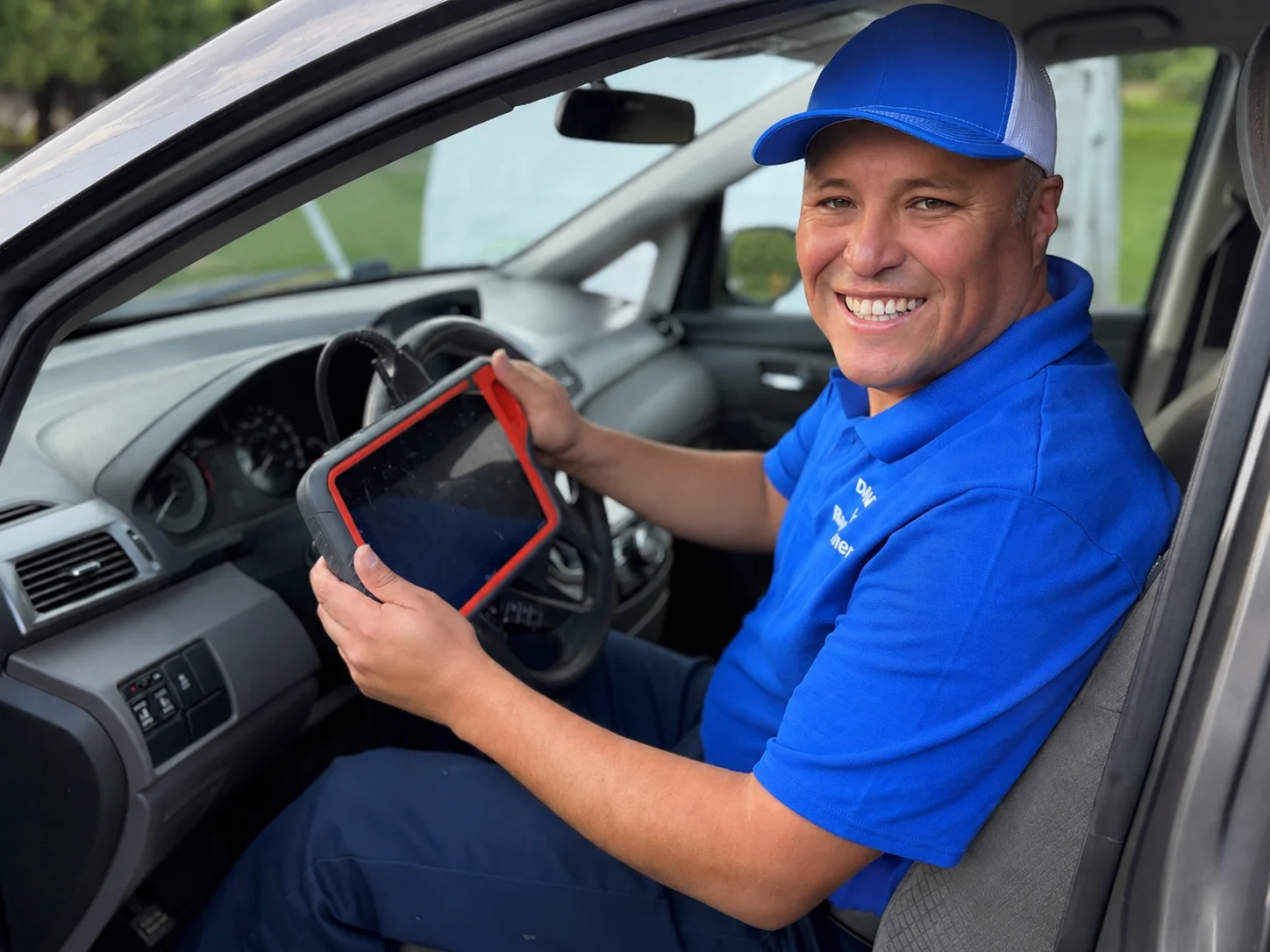
Key programming pairs a key or fob to your vehicle so the immobilizer recognizes it and allows the engine to start. It is separate from cutting, which only shapes the blade to turn the lock. Most vehicles built since the late 1990s need both, which is why a key that has been cut but not programmed will open the door and turn in the ignition while the engine refuses to start.
- Cutting is mechanical. Programming is electronic. Most vehicles need both.
- A flashing security light on the dash is the clearest sign this is a programming issue.
- Not every key can be paired. Wrong part numbers and locked used keys cannot be programmed around.
Is this really a key problem?
Several faults look like a dead key from the driver seat. Working out which one you have prevents you paying for the wrong service.
| What happens when you try to start | Most likely cause | Is a key the answer? |
|---|---|---|
| Engine cranks but will not fire, security light flashing | The immobilizer is rejecting the key | Yes, a programming or key issue. |
| Dashboard lights up normally, nothing happens on turning | Could be the immobilizer, could be the starter | Possibly. The security light tells you which. |
| Nothing at all, no lights, no sound | Flat vehicle battery | No. A new key will not help. |
| Slow, labored cranking | Weak vehicle battery | No. This is a battery problem. |
| Key will not turn in the ignition at all | Steering lock engaged, worn key, or ignition fault | Sometimes. Try turning the steering wheel while gently turning the key. |
| Push to start vehicle does not detect the fob | Dead fob battery or flat vehicle battery | Often not. Check both batteries first. |
A key problem and a vehicle problem are not the same bill
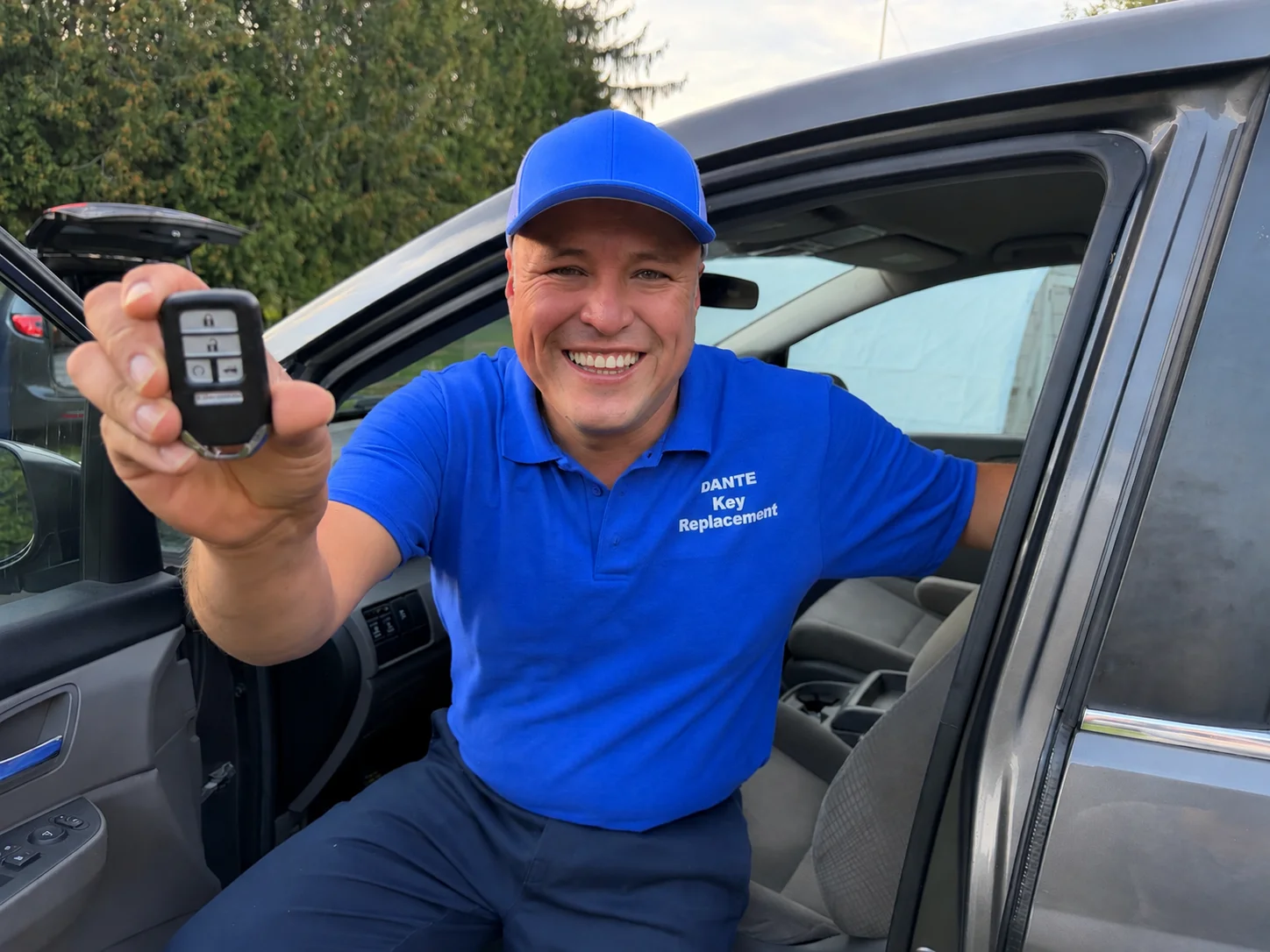
Plenty of faults that look like a dead key are not the key at all. We separate the two before any part is replaced, so you are not paying for a key when the fault sits in the vehicle. If you happen to have a spare, bring it to the appointment, because it makes that diagnosis faster.
When a key genuinely cannot be programmed
Programming is not a workaround for the wrong hardware. These are the situations where no amount of equipment helps, and you are told which one applies to your vehicle before anything is arranged.
- The key is the wrong part for the vehicle. Fobs that look identical can use different frequencies and different chips.
- The key is used and still locked to another vehicle. Many cannot be released once paired.
- The manufacturer restricts key generation to the dealer. This applies to several brands on newer vehicles. The manufacturer pages say which, so you find out before a visit rather than after one.
- A vehicle module has failed. If the immobilizer module itself is faulty, that is a repair, not a key job.
- The vehicle requires authorized network access. Some newer vehicles restrict the diagnostic connection until access is authorized.
Have this ready before you request service
Every item below either speeds the job up or decides whether it can be done at all. Having them ready at the start avoids a second trip.
- The year, make, and model of the vehicle.
- Whether you have any working key or fob left.
- The exact location of the vehicle, including a lot, level, or row if it is in a garage.
- Registration or title in your name, plus a photo ID that matches it.
- Whether the vehicle is drivable and whether it is blocked in.
Why proof of ownership is always required
A locksmith who makes a key or opens a lock without checking ownership is helping a theft. We check ownership on every job, without exception. It protects your vehicle and your home from someone doing the same thing to you.
Bring a photo ID plus one document that ties you to the vehicle or the property. For a vehicle that is the registration or the title. For a home that is a deed, a lease, or recent mail with your name at that address.
Having a key you bought elsewhere programmed
This is a common request and often a reasonable one. Improving the odds is mostly about what you send before the visit.
Send the part number
It is usually printed on the back of the fob or inside the battery cover. This one detail is the difference between a confident answer and a guess.
Say whether it is new or used
A new blank behaves very differently from a used fob that may still be paired to another vehicle.
Keep the packaging
If the part turns out to be wrong, an uncut key in its packaging is far more likely to be returnable than one that has been cut.
An honest note about supplying your own key
A key supplied by you cannot carry the same assurance as one supplied and tested by the person installing it. If it fails in three months, the fault is in hardware nobody here chose. That does not make it the wrong decision, and plenty of people take that trade knowingly. It should just be a decision rather than a surprise.
What decides the cost of programming
-
Tell us about the job
The year, make, and model, whether any working key is left, and where the vehicle is parked.
-
Get your quote and ETA upfront
You hear the price for your exact vehicle or lock, and when to expect us, before anyone is dispatched.
-
Pay when the work is done
Nothing is paid up front. You pay once the job is finished and tested. Card, tap to pay, and cash are all accepted.
What changes the price
- Key type
- A basic mechanical key, a transponder key, a remote head key, and a proximity smart key are different parts with different costs.
- Programming needs
- Some vehicles accept a new key with on board programming. Others require a diagnostic tool and a security access process that takes longer.
- How many keys are lost
- Replacing a spare while you still hold a working key is a shorter job than an all keys lost situation, which needs the key cut from the vehicle code and the system reprogrammed.
- Vehicle security level
- Some manufacturers hold key data behind a secure gateway or a waiting period. That changes the time and the equipment required.
- Location and access
- A vehicle in an open driveway is quicker to work on than one in a tight garage bay or a lot that limits access.
Complete car key and vehicle lock solutions
Explore dedicated guides for every car key situation, key system, programming requirement, and vehicle make.
Car key replacement
Mobile cutting and programming at your vehicle.
Lost all keys
Keys generated from the vehicle when no spare exists.
Key fob replacement
Fob pairing, button diagnostics, and replacement remotes.
Transponder & smart keys
Chipped keys, proximity push to start, and smart fobs.
Car key programming Current
Immobilizer pairing, OBD-II tools, and online keys.
Spare & duplicate keys
Duplicate keys made before losing your only working key.
Ignition cylinder repair
Worn cylinders that will not turn, repaired at the vehicle.
Vehicle makes coverage
Key systems by manufacturer across 40+ brands.
Mobile dispatch across Eastern Connecticut
We travel directly to your location in Norwich, New London, Groton, Colchester, and all 48 service towns.
Programming questions
It usually means the blade is correct but the immobilizer is not accepting the chip. The mechanical part of the key is doing its job and the electronic part is not.
Look at the dashboard as you try to start it. A security or immobilizer warning light, often a small car outline with a key or a padlock, that flashes or stays on is the clearest sign this is a programming problem rather than a mechanical one.
An immobilizer is an electronic anti theft system that stops the engine starting unless it detects a recognized chip in the key. It became standard equipment on most vehicles from the late 1990s onwards, and it is a large part of why stealing a modern car by hot wiring it no longer works.
The consequence for you is that a key must be electronically paired to your specific vehicle. Cutting a blade that fits is only half the job.
No. The key has to be the correct type for that vehicle, using the right chip and, for remotes, the right frequency. A key from a different model or a different year often cannot be paired at all, even when it physically fits the ignition.
Used keys carry an extra problem, because many are still locked to the vehicle they came from and cannot always be released.
Often yes, but you should get it checked before assuming so. Send the part number with your request and you will be told honestly whether it is likely to work.
The three common failures are the wrong part number, a used key still paired to another vehicle, and low quality aftermarket hardware that fails soon after installation. None of those are fixable by programming.
Sometimes, and it depends on the vehicle. Some systems allow a key to be added while existing keys keep working. Others require all keys to be reprogrammed together, which wipes any key not physically present at the time.
This matters if somebody else holds a key. Bring every key you want to keep working to the appointment, and say how many exist when you request service.
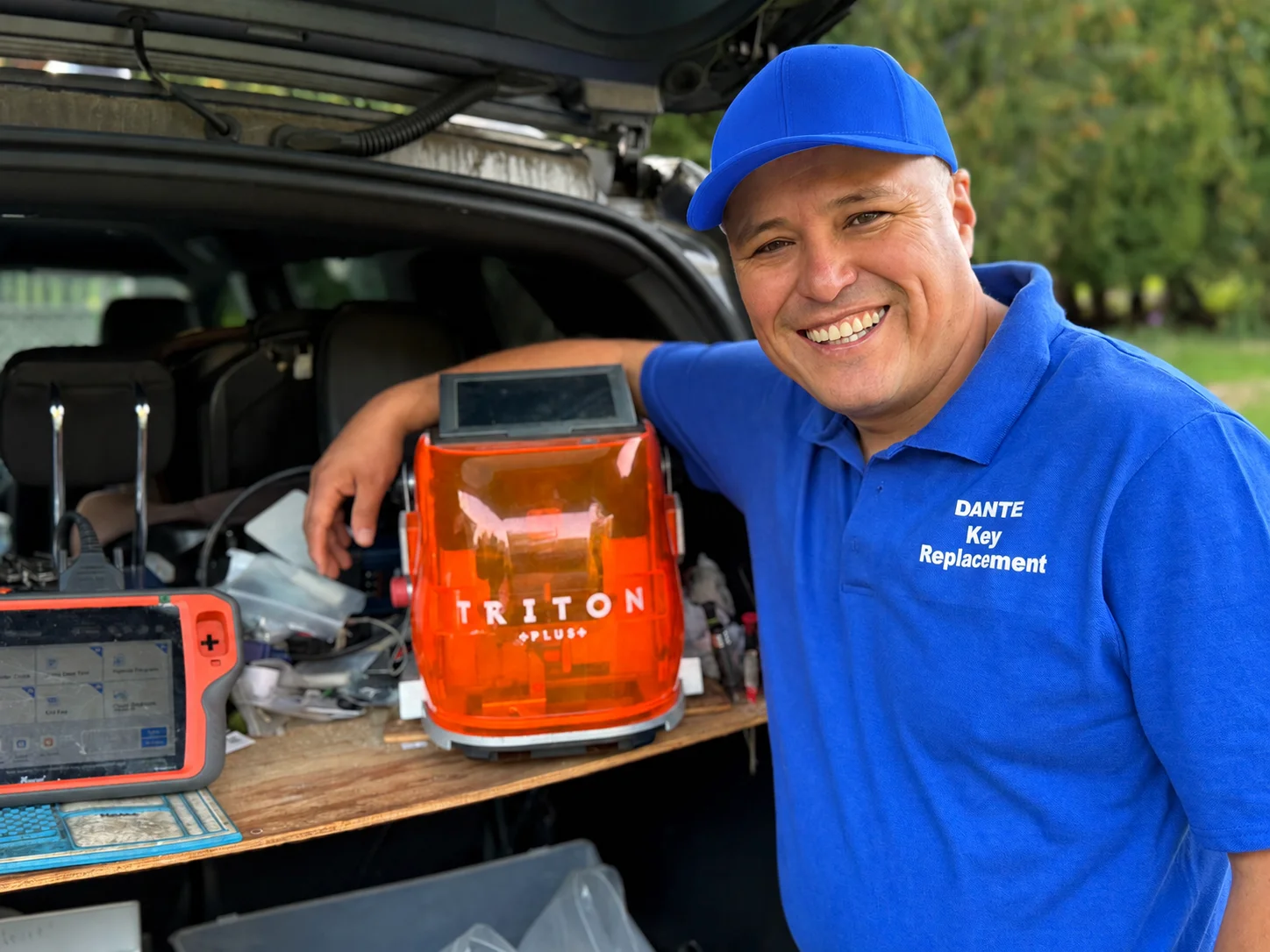
Most vehicles built in the last fifteen years require diagnostic equipment connected directly to the vehicle, and an all keys lost situation almost always does. A small number of older vehicles support an on board procedure, but it needs two existing working keys, which is rarely the situation somebody is in when they need a key.
Send your year, make, and model and you will be told which category your vehicle falls into before anything is arranged.
Key programming by vehicle
The brands this business is asked about most. Each page covers which key systems that brand uses and where a dealer may be required.
Describe exactly what the car does
Send the year, make, model, what happens when you turn the key, and whether a security light shows. That description usually identifies the cause before anyone drives out, so the right equipment arrives with him.
Or send a service request online if you cannot call right now.
Call or text with the vehicle or the property, the exact location, and what happened. You get an upfront quote and an arrival estimate before anyone is dispatched, and you pay only after the work is done.
Opening hours
HoursMonday to Friday 6:00am to 9:00pm, Saturday 6:00am to 11:00am
- Monday to Friday 6:00am to 9:00pm
- Saturday 6:00am to 11:00am
- Sunday Closed
Outside these hours, emergency jobs are taken case by case and are not guaranteed. Call to confirm.
Payment: Card, tap to pay, or cash, taken once the work is done.