
Locked out of your house or apartment
The goal is getting you inside without damaging your door or your lock, so you are not paying for new hardware on top of the visit. Proof that you live there is required first.
Or send a service request online if you cannot call right now.
Getting you back inside
Being locked out is a normal part of owning a door. It happens to careful people constantly, and there is nothing unusual about the call you are about to make.
- Your door is not damaged. Non destructive entry is the standard method, so your lock keeps working afterwards and your existing keys still fit.
- Your keys keep working. A lockout does not change your locks, so nothing needs replacing afterwards unless you want it to.
- No explanation needed. Say the address and the door. Nobody needs the story of how it happened.
- One visit. Entry and any rekeying you decide on afterwards can be handled in the same appointment.
- CT registered locksmithRegistration LCK.0000486
- Insured locksmithWork done by an insured business
- Upfront quote and ETABefore anyone is dispatched
- Pay after the workOnly once the job is done
- Family ownedLocal and accountable
- Damage free entryOur standard method
What a home lockout involves
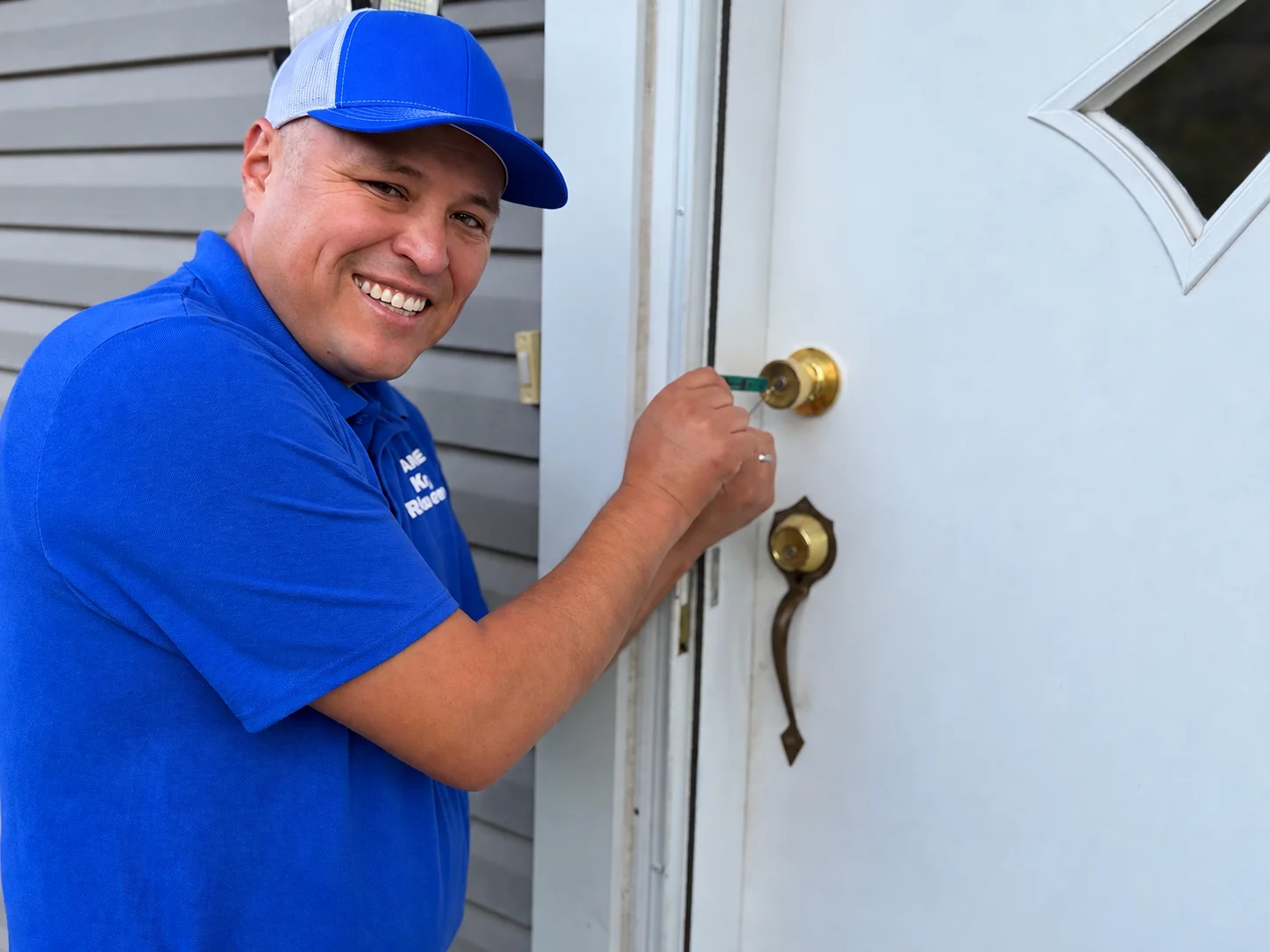
A residential lockout is entry to a house, apartment, condo, garage, or interior door without damaging the door or the lock. On a typical residential lock the method is non destructive, which means the lock still works normally afterwards and no new hardware is needed. Proof that you live there is required before any door is opened, and drilling is a last resort used only where a lock cannot be opened any other way.
- Non destructive entry is the default. Drilling is a last resort and you are told before it happens.
- Renting is fine. A lease, addressed mail, or a bill plus photo ID normally establishes residency.
- Interior doors are the easy case. Most bathroom and bedroom locks release with a paperclip.
What kind of lockout is this?
These are genuinely different jobs. Saying which one you have means the right approach and the right parts arrive first time.
House front or back door
The most common call. Usually a knob or lever with a separate deadbolt. Say whether the deadbolt is thrown, because that changes the approach.
Apartment or condo
Say which entrance your unit uses and whether there is a locked common door before your own. Both may need to be dealt with.
Garage service door
The side door into a garage is usually a normal exterior lock. An overhead powered door is a different problem entirely.
Interior door
Bedroom and bathroom privacy locks are designed to be released from outside. Look for a small hole in the outside handle first.
Interior doors are the quickest job of all
Bedroom and bathroom locks are privacy locks rather than security locks, so opening one is fast and the door is never damaged. If a child has shut themselves in a room, or a bathroom door has jammed with somebody behind it, say so when you request service so it is treated with the urgency it deserves.
Proving you live there
This is the part people worry about most, and in practice it is straightforward. You need a photo ID plus one thing that ties you to that address.
- If you own it. A deed, a mortgage statement, a property tax bill, or a utility bill in your name at that address.
- If you rent. A lease with your name on it, recent addressed mail, or a utility bill for the unit.
- If your ID is inside. A landlord or property manager confirming by phone, a neighbor who knows you, or a banking app on your phone showing your address.
- If the property is in a relative\'s name. Say so in advance so the right documents are agreed before the visit.
Have this ready before you request service
Every item below either speeds the job up or decides whether it can be done at all. Having them ready at the start avoids a second trip.
- The full address, including a unit or an apartment number.
- Whether you own the property or rent it.
- Proof that you live there or own it, such as a lease, a deed, or mail with your name, plus a photo ID.
- Which door is locked and what type of lock it uses.
- Whether anyone else needs to approve the work, such as a landlord or a property manager.
Why proof of ownership is always required
A locksmith who makes a key or opens a lock without checking ownership is helping a theft. We check ownership on every job, without exception. It protects your vehicle and your home from someone doing the same thing to you.
Bring a photo ID plus one document that ties you to the vehicle or the property. For a vehicle that is the registration or the title. For a home that is a deed, a lease, or recent mail with your name at that address.
Why drilling is a last resort, not a method
A drilled lock is a destroyed lock. It has to be replaced, which means you pay for the visit and for new hardware, and your door is unsecured until the replacement is installed.
On a standard residential cylinder that is almost never necessary. Non destructive entry works with the lock rather than through it, and afterwards your existing key still operates it exactly as before.
There are real exceptions. A high security cylinder built specifically to resist this, a lock that has already been damaged or partly forced, or a mechanism that has seized may leave no other option. When that looks likely, you are told before anything irreversible happens, along with what replacement hardware would involve, so the decision is yours.
A warning sign worth knowing
A service that quotes a very low call out price and then reaches for a drill on a standard residential lock is following a known pattern. The cheap price gets the visit, and the real bill arrives with the replacement hardware. Ask directly whether non destructive entry will be attempted first, and ask what happens to the price if it is not. An honest answer to that question tells you most of what you need to know.
What you should expect
- Non destructive entry attempted first on a standard lock.
- A clear explanation before anything irreversible is done.
- Your existing keys still working afterwards, in the normal case.
- The price implications explained before, not after.
What decides the cost of a home lockout
-
Tell us about the job
How many locks are involved, whether you want them rekeyed or replaced, and the brand on the lock if you can see one.
-
Get your quote and ETA upfront
You hear the price for your exact vehicle or lock, and when to expect us, before anyone is dispatched.
-
Pay when the work is done
Nothing is paid up front. You pay once the job is finished and tested. Card, tap to pay, and cash are all accepted.
What changes the price
- How many locks
- Rekeying four exterior cylinders costs more than rekeying one. The price scales with the number of cylinders, not the number of doors.
- Lock condition and brand
- A serviceable modern lock can usually be rekeyed. A worn, damaged, or obsolete lock is often cheaper to replace than to repair.
- Rekey against replace
- Rekeying keeps your existing hardware and changes which key operates it. Replacement changes the hardware itself. Rekeying is usually the lower cost option when the hardware is in good shape.
- Keyed alike requests
- Bringing several locks onto one key is straightforward when the cylinders are compatible and more involved when they are not.
- Access and hardware type
- A standard residential deadbolt is a different job from a commercial storefront lock.
Lockout, rekeying, and lock change services
Fast, damage free entry and lock services for vehicles, homes, and commercial properties across Eastern Connecticut.
Vehicle lockout
Damage-free door and trunk entry for cars, trucks, and RVs.
Home and apartment lockout Current
Non-destructive front door, knob, and deadbolt picking.
Commercial lockout
Office, storefront, and commercial door unlocking on site.
Rekey locks
Change internal pins so old keys no longer work.
Lock change and hardware
Fresh locksets, deadbolts, and hardware replacement.
Car key replacement
Lost your keys during a lockout? New keys made on site.
Home lockout questions
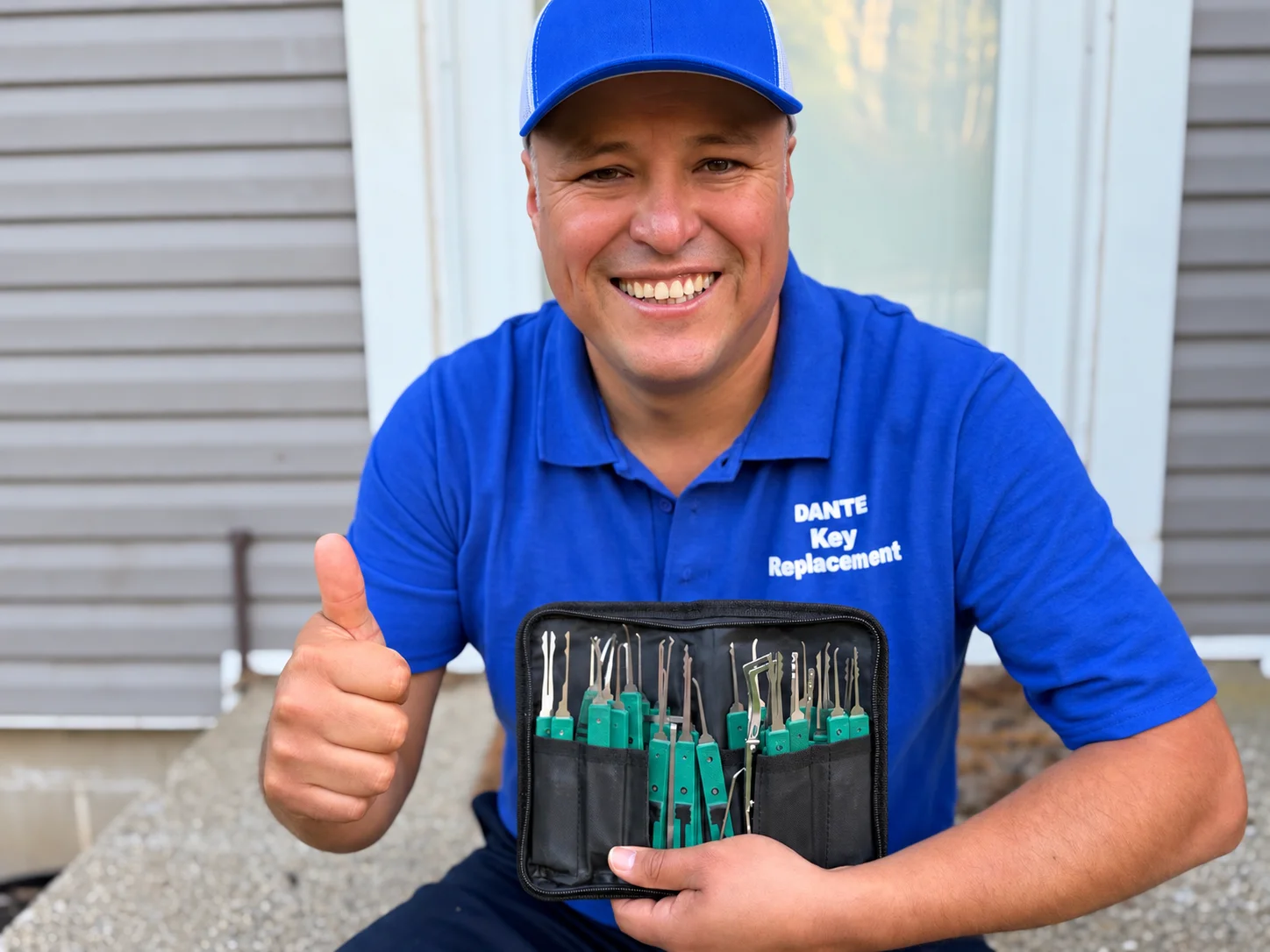
Drilling is the last resort, not the standard method. On a typical residential lock the goal is non destructive entry, which means the lock still works normally afterwards and you are not paying for new hardware on top of the visit.
Drilling becomes necessary in a minority of cases, usually a high security cylinder, a lock that is already damaged, or one that has seized. If that looks likely you are told before it happens, along with what replacing it would involve, so it is your decision rather than a surprise on the invoice.
Yes, if you can show you live there. A lease with your name on it, recent mail addressed to you at that unit, or a utility bill will normally do, together with a photo ID.
Getting you in is different from changing anything. A tenant can generally be let back into their own home, but altering the locks usually needs the landlord's agreement. If you want the locks changed as well, say so and that can be worked through properly.
This is common and it is not a dead end. Ownership or residency can often be established another way, for example through a neighbor who knows you, a landlord or property manager who can confirm the tenancy by phone, or documents accessible from your phone such as a banking app showing your address.
Say so when you request service rather than on the doorstep. It gets sorted in advance instead of leaving you standing outside while it is worked out.
Interior doors are the quickest job of all. Bedroom and bathroom locks are privacy locks rather than security locks, so they open fast and the door is never damaged.
If somebody is shut in the room, particularly a child or an older person, say so when you request service so it is treated as urgent rather than routine.
Usually. A garage side door with a normal lock is much the same job as any other exterior door. An overhead garage door is different, because it is often controlled by an opener rather than a keyed lock.
Say which one you mean. If the house door into the garage is the barrier and the overhead door is powered, sometimes restoring power or using an emergency release is the answer rather than any lock work.
Not because of the lockout itself. Being locked out means the key was inside or missing, not that your security was compromised.
It is worth doing if the key is genuinely lost rather than sitting on the kitchen table, because a lost key could be found by somebody who knows where you live. In that case rekeying is usually the answer rather than replacing hardware. The rekey page explains the difference.
Home lockouts in 48 Eastern Connecticut towns
Each town page explains what the local roads, housing, and access mean for the visit. Find yours below.
Hartford County 1 town
Middlesex County 4 towns
New London County 21 towns
Send your address and which door
Include the unit number if it is an apartment, whether the deadbolt is thrown, and what you can show to prove you live there.
Or send a service request online if you cannot call right now.
Call or text with the vehicle or the property, the exact location, and what happened. You get an upfront quote and an arrival estimate before anyone is dispatched, and you pay only after the work is done.
Opening hours
HoursMonday to Friday 6:00am to 9:00pm, Saturday 6:00am to 11:00am
- Monday to Friday 6:00am to 9:00pm
- Saturday 6:00am to 11:00am
- Sunday Closed
Outside these hours, emergency jobs are taken case by case and are not guaranteed. Call to confirm.
Payment: Card, tap to pay, or cash, taken once the work is done.